Musings

New Year, New Hope

Each year, I set new reading and writing goals. Most years, I fail to meet them. Last year, I did something radical and set abstract goals: read more, write more, polish/submit more, and hustle more.

This went against everything I’d been taught about goal-setting. Goals should be SMART—that is, specific, measurable, achievable, rigorous, and time-bound.

It’s impossible to judge whether or not I met my 2015 goals, which was kind of the point.

Overall, I think I did read and write more. The abstract nature of the goals gave me the freedom to read and write what and when I wanted. If I felt like starting a 700-page book, I did, regardless of what impact it might have on my tally of annual number of books read. (Enter House of Leaves.)

That’s my real problem with the Goodreads goal: literary journals and magazines don’t count, reading one book (like one I’m editing) multiple times doesn’t count, nothing read online counts, reading a friend’s unpublished work—or rereading my own work for that matter—doesn’t count. The incentive created by the Goodreads goal doesn’t match my own reading objectives. (I went into this more last year, if you’re interested.)

I’d rather read 35 books I really want to read plus all of the above texts than read 50 books chosen simply because I could get through them all in a single calendar year.

But at the same time, I did find myself frequently counting my Goodreads tally even if I wasn’t aiming toward a specific goal. (For the record, I read eight more Goodreads-countable books in 2015 than in 2014 when I had a goal.) I do plan on setting a Goodreads goal this year, but I’ll make it far smaller than I have before so I don’t feel limited by book length or non-countability.

Writing is different, however. I simply can’t abide bean counting when it comes to writing. Many of my writer friends love word count goals, but it takes all the pleasure out of writing for me. Rather than set numerical goals for my writing, I’m going to focus on what I’d like to produce and set deadlines for accomplishing those objectives.

Meanwhile, I’m pretty sure I polished/submitted less. I “hustled” less in the way I meant it—maintaining an active web presence—but perhaps more in other ways: speaking at conferences, giving readings, and other important networking that goes beyond a Tweet here and a blog post there.

I like to share my goals publicly because it holds me more accountable for meeting them, or at least sincerely working toward them. So without further ado, here they are:

Read at least 36 Goodreads-countable books, plus as many non-countable texts as I want.

Follow me on Goodreads at goodreads.com/stefbt.

Write something new and/or edit something old daily. Set deadlines for each project, and prioritize meeting them.

Submit pieces that are ready at least once each week. Create a new submission schedule, and actually use it this time.

Develop new content for this website, especially resources for fellow writers.

Post on blog at least once each week, and share content on Twitter at least once per day.

Follow me on Twitter @brooktrouting.

Attend at least a dozen events that support my writing life, whether conferences, readings, or field research opportunities.


I think that’s enough to keep me busy for the next 366 days. (That’s right—we get an extra day. 2016 is going to be awesome.)

Happy New Year, and good luck achieving your own goals!

Standard
Book Reviews, Musings

Great Reads 2015

Last year, I called out the top five books I read in 2014. This year, I am compiling another top books list for 2015, but I’ve thrown in a little twist by selecting a top book in several categories.

Again, the idea is to list the top books that I read in 2015. None of them were actually published in 2015.

vonneBest Short Story Collection

Welcome to the Monkey House by Kurt Vonnegut

As I mentioned in my Goodreads review, I often claim to prefer novels to short stories, but Vonnegut is a master of both. Look no further if you’d like to see just how large a story can be communicated in just a few words.

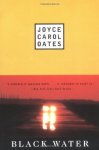
jcoBest Novel

Black Water by Joyce Carol Oates

I wrote a six-paragraph review of this one for Goodreads, so I’m just going to share a tiny piece of it here: “It’s blow-your-mind good.”

Find the rest of the review here.

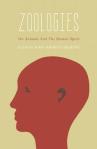
zooBest Essay Collection

Zoologies: On Animals and the Human Spirit
by Alison Hawthorne Deming

Each chapter of this book is an essay exploring a different connection between humans and non-human animals with great insight and expertly precise language, and though there is lamentation, there is also hope.

Read the rest of my review here.

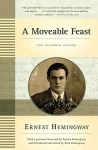
feastBest Memoir

A Moveable Feast by Ernest Hemingway
(The Restored Edition edited by Seán Hemingway)

Here’s another one that I waxed poetic about in my Goodreads review. Here’s a link if you’re interested in my ramblings.

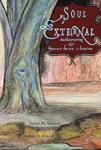
soulMost Innovative

Soul External: Rediscovering the Great Blue Heron
by Steve Semken

Placing the soul externally is not difficult. Just figure out how and where.

This is the future of nature writing at the intersection of fantasy, myth lore, natural history, personal essay, philosophy, and even theology. It’s pastiche with several quotations celebrating the authors that have influenced Steve the most—from Edward Abbey to Robert Wolf—as well as full-color illustrations and typography by Andrew Driscoll and poetic text formatting that often had me wondering: what is this book I’m reading? Beautiful is what it is. It’s the kind of book that you won’t ever see as a mass market paperback. It’s far too precious for that. It’s a gift to all those who can’t live without wildness.

fracBest Book-That’s-Not-Out-Yet
(or Best Multi-Genre Collection)

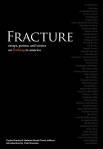
Fracture: Essays, Poems, and Stories on Fracking in America
by Taylor Brorby and Stefanie Brook Trout, editors

I know it’s probably gauche to include my own book on my annual “Tops” list two years in a row. If you’d read Fracture, you’d know why it deserves to make this list, but you haven’t because it’s not out yet! Don’t take my word for it. Ask those who have gotten a sneak peak at the collection, like Mary Evelyn Tucker who says, “This stunning collection of essays, poems, and fiction is gripping and illuminating. […] Indeed, no where else has such a gifted group of writers been assembled for a clarion call to awakening for our future generations.” Preorder your copy here.

*

I faced a few dilemmas in coming up with this list.

The first, though these really aren’t in any particular order, is that I really wanted a “Best Graphic Novel” or “Best Sequential Art” category, but I really couldn’t decide. I’ve dabbled in four different series this year, and Neil Gaiman easily wins with the Sandman, but which volume? Number 5, A Game of You? Or #6, Fables and Reflections? I’m really not that concerned about it, but I wanted to acknowledge that I did, in fact, read enough comic books to warrant a subcategory here, but my indecision won out again.

On the other hand, I didn’t read enough poetry collections in 2015 to really have a “Best Book of Poetry” category. This year, my poetry mostly came in small doses: in anthologies, literary journals, and online. So with that in mind and looking toward the future, one of my 2016 goals is to read more poetry, starting with the two books on my to-read shelf. Then I’ll have to go out and actually buy more poetry, which I should be doing anyway.

Likewise, I really didn’t read much Murakami in 2015. How tragic! There’s another 2016 goal: must read more Murakami.

*

So what were the best books you read in 2015?

Standard
Random

In Memory of Doug Tompkins

Sadly, Douglas R. Tompkins passed away yesterday after a kayaking accident in Chile. Most of the news headlines nutshell his bio as “North Face Founder” or “Founder of North Face and Esprit” because that’s what made him a billionaire, but he left the business world decades ago after his ecological concerns led him away from the consumerism of the fashion industry and into conservation.

I never had the opportunity to meet Doug, but he generously endorsed an advance copy of Fracture, and his own nutshelling of his bio made no mention of North Face or Esprit. Instead, he cited his environmental work as founder of Tompkins Conservation and the Foundation for Deep Ecology. So yes, let’s remember his success as an entrepreneur, but let’s also remember that he walked away from all of that to become a hero of the modern conservation movement.

I guess this post is my way of honoring Doug’s memory and the example he set for leaders of the twenty-first century. Our world is better because of him. Thank you, Doug, and thanks to all those who continue his work.

Standard