
 My work as a reviewer for the Review Review continues with a review of Five Points: A Journal of Literature and Art.
Read “Lit Mag is Place of Convergence for Genres, Styles, Artists and Writers” here.
My work as a reviewer for the Review Review continues with a review of Five Points: A Journal of Literature and Art.
Read “Lit Mag is Place of Convergence for Genres, Styles, Artists and Writers” here.
Fracture opened for submissions a little over one year ago, and this Thanksgiving, I wanted to take the opportunity to express my gratitude toward those who have helped support the project.
I have to start with Taylor Brorby, my co-editor, since this book simply would not exist without him. The concept was his idea, and I am so grateful that he invited me to join him in taking this book from concept to reality.
Of course, Steve Semken of Ice Cube Press was the one who said yes when we pitched the idea, and Taylor and I are both so thankful to Steve for believing in us and in Fracture. The publishing world needs more people like Steve, and I’m honored to continue working with him.
Without all of our contributors, Taylor and I would have a pretty slim volume, and I am grateful for each of them as well as everyone else who submitted their work to Fracture. Thanks also to Samantha Futhey, a brilliant poet, wonderful person, and Ice Cube Press intern for her help with final copyedits.
Many thanks to Pam Houston for agreeing to write an introduction to the book and to everyone who gave us their endorsements (which can be found here on the Ice Cube Press website).
We are indebted to Bruce J. Miller of Miller Book Trade Marketing, who is the Ice Cube Press sales rep, for his support of the project. And thanks also to our distributors, all the book sellers, and the professors who are teaching Fracture in their college classes. Without them, Fracture would be a tree falling in the forest without anyone around to hear it.
Thanks to our partners at 350.org and Orion, to everyone who has pre-ordered a copy of Fracture, and to everyone else who eagerly awaits its release. Thanks to all of my friends, family, and colleagues that have supported me thought this project.
To the environmental writers and activists who came before us, to those who will come after us, to all who have the courage to speak: thank you.
Thank you to those of you who follow this crazy little thing called my author website, and a big welcome to those of you who are visiting for the first time. I’ve been curating online resources for readers and writers, so you may experience some minor changes to the website as I make room for these new pages over the next few months.
It’s been a while since I’ve posted, but that isn’t because things are quiet over here in my pond. Defending my thesis, finishing my MFA, moving back to Michigan, and the Great Job Search of 2015 have kept me busy. At the same time, I have had plenty of writerly developments, and you can expect me to backdate some posts about those here soon.
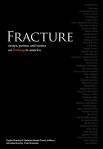 And you’ll definitely get plenty of updates (as both new and backdated posts) about Fracture soon too. If you don’t know yet, Fracture: Essays, Poems, and Stories on Fracking in America is a new Ice Cube Press anthology that I am editing with Taylor Brorby, a colleague of mine from Iowa State University who was recently named the Reviews Editor for Orion Magazine. With an introduction by Pam Houston, Fracture features work from dozens of contributors and will be the first literary collection to focus on hydraulic fracturing. I’ll put that contributor list up here with a link to their websites before December end.
What are people saying about Fracture? Let’s have a little preview, shall we?
Symphonic in form, euphoric in heart, this volume brings together a great, sometimes-desperate chorus that ought to be heard world-over, wherever there is oil and gas-rich shale below, and living things above. The politics and economics of fossil fuels has never been a pretty thing, but the ingenious barbarity of fracking against a vulnerable and increasingly debauched planet may be the ugliest of all extractive methods. From memory to musings, in facts and fictions, in reason and rhyme, these assembled pieces offer acutely aware and knowledgeable perspectives on a disastrously flawed practice. Listen before it’s too late.
–Lynn Stegner, Because a Fire Was in My Head
Fracture officially releases February 14, 2016, but you can read more advance reviews and preorder copies now on the Ice Cube Press website.
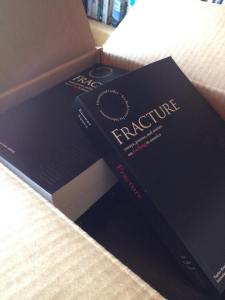 The Fracture galleys are in!
My co-editor Taylor Brorby, our publisher Steve Semken, and I are hard at work proofing these advanced copies, and we can’t wait to share this powerful book with you. But we’ll have to wait because we want it to be perfect for you. Ice Cube Press will release Fracture on February 14, 2016.
In the meantime, follow us on Facebook and Twitter @fractureanth.
And while you’re at it, here are some more great pages to follow for Fracture updates:
And, of course, you can find me Tweeting (or sometimes not Tweeting) @brooktrouting.
Taylor Brorby and I received so many wonderful submissions to Fracture: Essays, Poems, and Stories on Fracking in America and are very thankful to everyone who sent us their work! We are pleased to release our list of talented contributors:
Plus, the anthology will include work by the editors, Taylor Brorby and yours truly, and an introduction by Pam Houston.
Learn more on the Ice Cube Press website.
Follow us on Facebook for the latest news.
My Fracture co-editor Taylor Brorby and I have a few tips for writers who would like to see their work anthologized some day soon.
Read “So You Wanna Be Anthologized” in The Review Review or on the Ice Cube Press blog.
Fracture: Essays, Poems, and Stories on Fracking in America is open for submissions until June 1, 2015. Find our guidelines on the Ice Cube Press website.
Are you attending the North American Review’s Bicentennial Conference in Cedar Falls?
If so, check out the Ice Cube Press table at the book fair. Also, come see a publishing panel featuring me, fellow Prairie Gold editor Lance Sacknoff, and Ice Cube Press founder/CEO Steve Semken.
J-3 Breaking into Publishing:
How to Transform a Manuscript into a First Publication
4:15-5:30, Bartlett Hall 0034
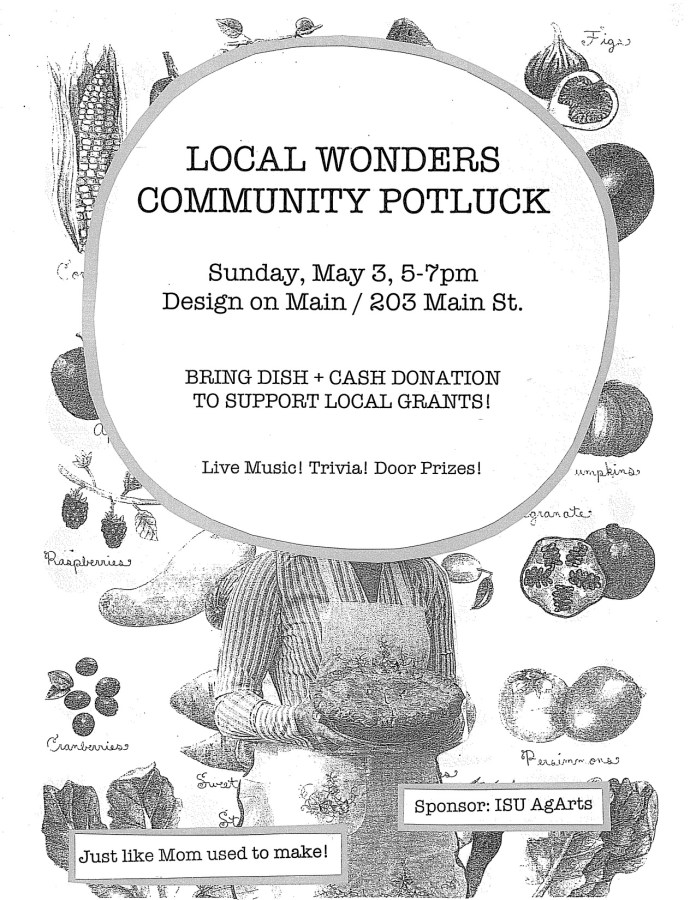
Sunday, May 3, 2015, at 5:00 pm
Design on Main, 203 Main Street
This weekend is the 2015 Local Wonders Community Potluck sponsored by AgArts. Last year, the attendees voted for two winners of the 2014 Local Wonders Grant, one of which was Prairie Gold: An Anthology of the American Heartland. On Sunday, PG editor Lance Sacknoff will present on all the awesome things the AgArts grant helped us do. Find more details here.
There are some who can live without wild things and some who cannot.
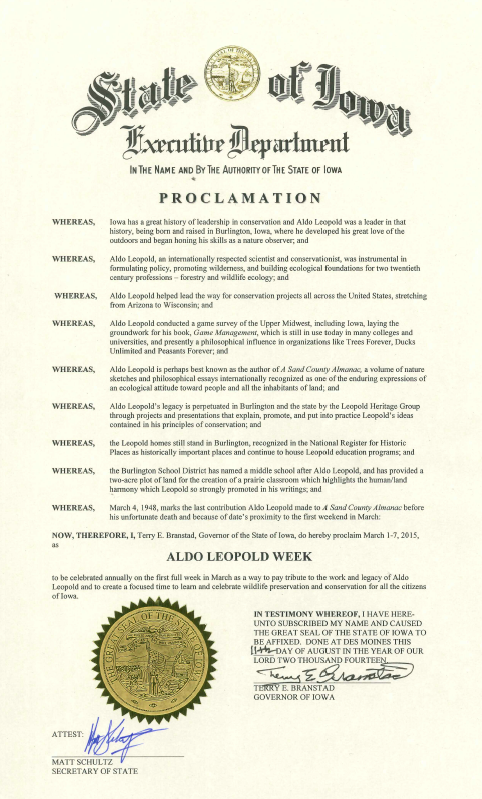
Though Leopold’s A Sand County Almanac was written in and about Wisconsin, Leopold was born in Burlington, Iowa, and that’s where his love of nature first began to emerge. Last fall, the State of Iowa proclaimed the first full week of March as Aldo Leopold Week, a time to celebrate and pay tribute to Leopold’s legacy as a leader in conservation.
As a writer, I also see Aldo Leopold Week as a time to celebrate and reflect on nature writing, a genre that influences my own writing deeply. I don’t define myself primarily as a nature writer because the term is limited, and I don’t build fences between what I do and don’t do, but my experiences writing about nature were certainly what inspired me to pursue writing seriously and remains a passion of mine.
(Those interested in beginning nature writing should check out this excellent resource: “Henry Thoreau as a Model for Nature Writing” by Ron Harton.)
I wanted to take this opportunity to call out some amazing nature writing texts. There are hundreds of books shelved under the category of “Nature Writing” on Goodreads, and there are a lot that I haven’t read. I’m not including any books on this list that I haven’t read in their entirety, and while I’m ashamed to admit it, there are some really important books that I’ve only read in excerpts.
It’s worth acknowledging that this list is more than 75% white men. For a long time, the genre was largely dominated by white men, but there are now plenty of excellent nature writing texts by women and people of color. I just haven’t read them all yet, and a lot of the ones to which I’ve been exposed, I haven’t had the chance to enjoy in their entirety yet. Don’t worry. It is a priority of mine. Many are sitting on my bookshelf right now, just waiting for their turn.
Therefore, please don’t see this list as my nature writing canon–far from it. I can only recommend that which I know, and unfortunately, my formal literary education focused primarily on white men, and I’m still in the process of making up for lost time. Check out that Goodreads shelf I mentioned, and you’ll see a more diverse array of nature writing texts.
One more thing worth noting is that I don’t actually use the category of “nature writing” to organize my own books on Goodreads. It’s too hard for me to define. I use the much broader “environment.” I didn’t want to overthink what is or isn’t nature writing for this blog post, so the following list is based on the Goodreads hive mind. If people are shelving it under “nature writing,” then I counted it. If they aren’t, then I didn’t. I expect controversy.
Without further ado, here are just a few great nature writing books besides A Sand County Almanac with Other Essays on Conservation from Round River by Aldo Leopold. They appear in alphabetical order, not in any order of preference.
Lots of omissions here, I know, and probably plenty of books that would be better classified elsewhere. The point is not to for me to establish the nature writing canon but to spark discussion, so discuss!
What are your favorite nature writing books? What are the most offensive omissions (which may be either because I haven’t read a critical nature writing text yet or because the Goodreads community hasn’t yet shelved the work as “nature writing”)? What doesn’t belong on this list? Often we think of nature writing as nonfiction, yet a few fiction texts made the list–but no poetry. Does nature writing have to be nonfiction? Within nonfiction, do research (rather than observation) based texts count? Does any of this even matter?
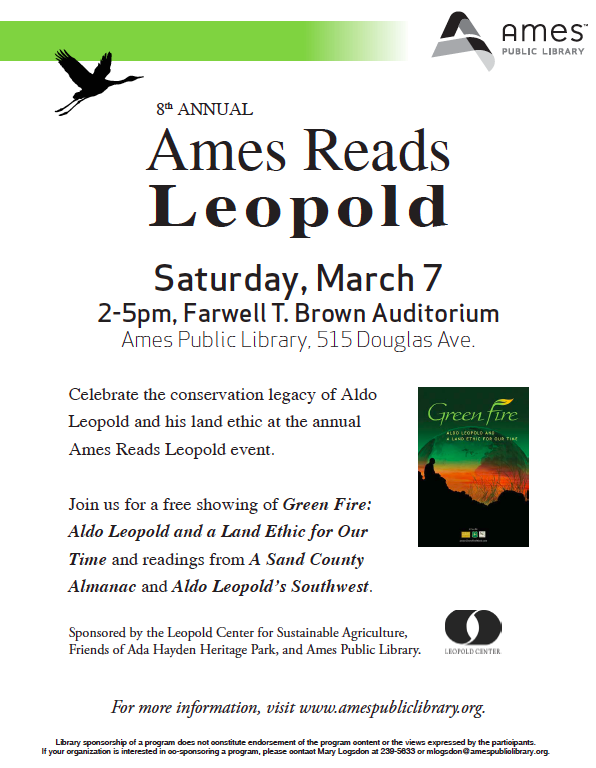 Though this is the first annual Aldo Leopold Week, communities nationwide have been celebrating Aldo Leopold Weekend on the first weekend of March since 2004. And Saturday, March 7, will be the eighth annual Ames Reads Leopold event.
I had the pleasure of reading “Axe-in-Hand” at last year’s Ames Reads Leopold, and this year, I am thrilled to be reading “January Thaw.”
The event is free and open to the public. You can expect readings from Leopold’s work, a screening of the Emmy award winning documentary Green Fire, and an overall good time. It’s also a great opportunity to check out the newly renovated Ames Public Library if you haven’t had the chance to do that yet. Check out this news release for more information.
 My work as a reviewer for the Review Review continues with a review of Rock & Sling.
Read “Faith-Oriented Lit Mag Explores ‘Boundaries of What We Know to Be True'” here.
Inspired by the lovely blog Pints And Cupcakes, I wanted to look back at the books I read in 2014 and call out a few of my favorites. P&C‘s Chloe Clark listed her top 15, but I’m just going to pick five because I don’t think I read nearly as many books as she did in 2014.
To be clear, the idea is to list the top books that I read in 2014. Only a few of them were actually published in 2014.
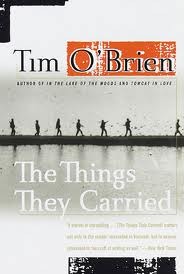 The Things They Carried – Tim O’Brien. (Here’s my short Goodreads review.) I know what you’re thinking. “This is the first time you’re reading this?” The answer is yes, and it shames me to say as much. First published in 1990, TTTC is one of the finest works of fiction I’ve ever encountered. If you haven’t read it yet, stop reading my words right now and get on it. I promise this post will still be here when you get back.
 Colorless Tsukuru Tazaki and His Years of Pilgrimage – Haruki Murakami. (Here’s my short Goodreads review.) I love Murakami, and I try to read at least one of his books each year, though I’ll have to read more than that if I’m ever going to keep pace with his new work while getting caught up on some of his older stuff. I’ve encountered several negative reviews of CTTAHYOP (published in 2014), but they were mostly from people who are either just starting to read Murakami or else have tried him before and didn’t like it but maybe wanted to so were trying him again. So I strongly recommend it to Murakami fans, but I realize it’s not for everyone.
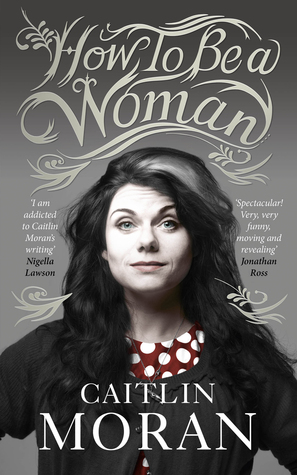 How to Be a Woman – Caitlin Moran. (Here’s my short Goodreads review.) I’d been wanting to read this one since I first heard Caitlin Moran on NPR in 2012. I actually surprised myself when HTBAW ended up the only nonfiction book that rose to the Top Five. I’m working on a novel for my thesis, so I guess I’ve been in fiction mode lately. But let’s not let that diminish how much I enjoyed reading Moran’s 2011 memoir. I read some great nonfiction books this year, but I devoured this one.
 The Pushcart Prize XXXVIII: Best of the Small Presses 2014 Edition – Edited by Bill Henderson. (Here’s my short Goodreads review, where I rank my favorite pieces in each genre.) The quality of the nonfiction alone got this book on my Top Five list. Don’t get me wrong: there’s plenty of good fiction and poetry here too. But the nonfiction seemed of another class entirely. It inspired me to step my own essay-writing game up considerably.
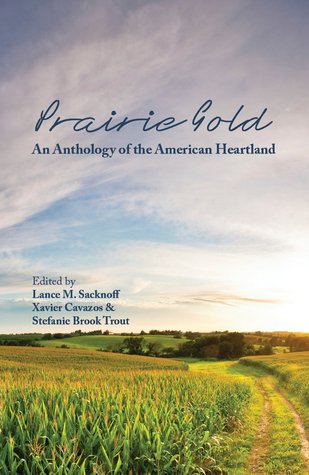 Prairie Gold: An Anthology of the American Heartland – Edited by Lance M. Sacknoff, Xavier Cavazos, and me, Stefanie Brook Trout. So I know it’s tacky to list your own book – I’d say it’s an unwritten rule, but I’m sure it is in fact written somewhere – and yet I’m going to do it anyway because as hard as I worked on this thing, I can’t take credit for the quality of writing our contributors brought to the table. I’ve read this book more times than I’ve read any other text, and it never fails to fill me with joy, pride, and excitement. (More about Prairie Gold on the publisher’s website.)
Several wonderful books almost made the Top Five, but these were the ones that made me feel the most.
I’m looking forward to doing this again next year, maybe even with a longer list, though for the first time in several years I won’t be setting an annual goal.
I love Goodreads – absolutely adore it – and I’ve participated in their annual reading challenge since 2011. It’s a fun way to hold myself accountable for spending as much time reading as I both should and want to without making it feel like work. It’s always so much easier to find a new show to binge watch on Netflix, but you have to rein that in somehow.
Inevitably, at the end of the year, I was always scrambling to get my hands on shorter reads – novellas, poetry collections, graphic novels, chapbooks, you get the idea – or else finishing books I’ve partially read for some reason or another in order to meet my goal, which is fine because that stuff is good to read too, but this past year I really didn’t want to do that again. I just didn’t feel like it, and I’m a strong believer in doing what you feel like when it comes to reading.
I wonder if there isn’t another way to do a reading challenge that goes beyond books. I love books – I really can’t overstate that enough. But this year, I’ve been trying to read more literary journals, magazines, news, blogs, etc., and I’ve also been doing a lot of editing – reading other people’s work over and over again (and I guess reading my own work over and over again as well) – and this type of reading matters too, even though I can’t log it into my Goodreads.
My older sister, who is a middle school teacher and uses this strategy with her students, suggested (several years ago, in fact, when I first mentioned my impulse to read shorter novels rather than undertake weighty tomes because of the impending Goodreads deadline) that I go by a page count goal instead, which is a smart and perfectly reasonable suggestion, but I don’t want to have to add tally marks to a scrap of paper every time I read something. (Is there an app for this? Or can someone please develop one? Thanks!)
Maybe I’ll set a 2015 Goodreads Reading Challenge in a few months, but for now my goal for 2015 is simply to read a lot and not just books.
Are you on Goodreads too? Do you want to connect on Goodreads? Add me as a friend or follow me as a fan here.
I started this website in late 2013 because Mary Swander, the Poet Laureate of Iowa, told me that “As writers, we need to be hustling everyday.” The purpose of the site is to build a fan base by publicly sharing and archiving my professional accomplishments.
I’ve never been wholly comfortable with the level of self-promotion being an artist requires, but it’s part of the territory, and in 2015, so is blogging and social media. I know I am not the only writer who feels this way – it’s something I’ve discussed with my writer friends and colleagues extensively – but I think it’s important to mention every now and then. Because I’m not posting updates about all of my failures. Rejections don’t get a blog post. Nor do the awards I didn’t get. You won’t see me tweeting about not meeting my 2014 Goodreads goal or winning NaNoWriMo.
So as I celebrate some awesome things that have happened over the past year, it isn’t to brag or, worse, #humblebrag but to remind myself and others that, despite the setbacks that are perhaps more readily apparent in the day-to-day, 2014 was actually a pretty rocking year.
With out further ado, here are a bunch of things I’m looking back and feeling good about, a few things I want to work on, and a few things I’m just really excited about. I wish everyone a very happy 2015!
*More details about each of these highlights can be found in past News & Events posts or on either the Bio or Publications, Etc. pages.
This volume was no doubt a massive undertaking, and the effort has paid off. It will interest anyone who sees who they are as a product of where they are, and will especially appeal to those who sometimes feel that, in the words of Bakopolous, it is “almost too beautiful to bear that rolling countryside without a notebook and pen in hand.”
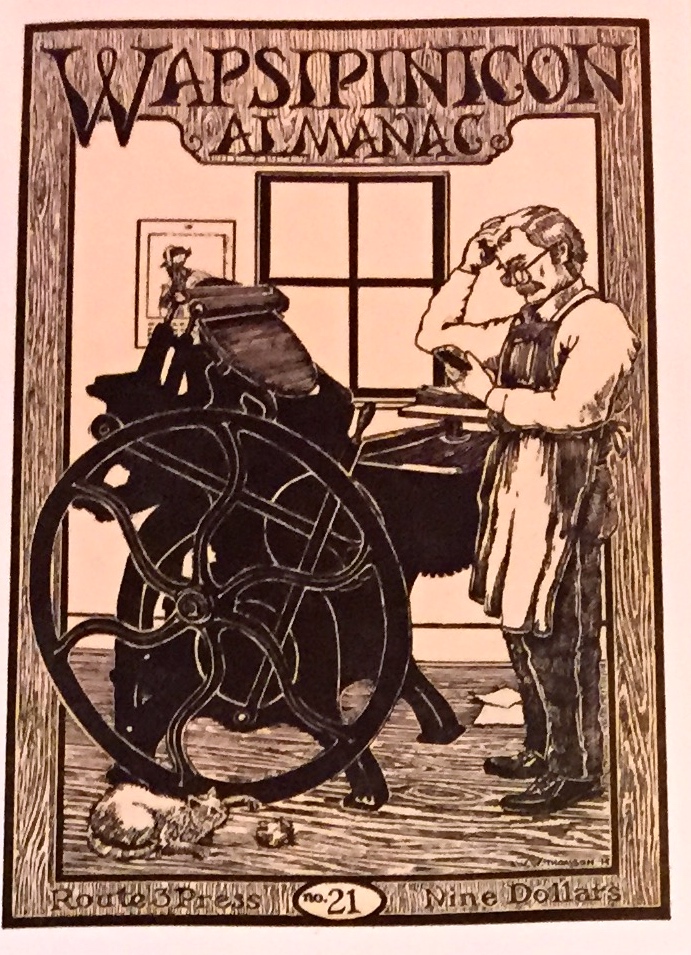
Pick up a copy of the latest Wapsipinicon Almanac (No. 21) to read more of what Tad Boehmer had to say in his review of Prairie Gold: An Anthology of the American Heartland.
Also in that issue, check out Robert Leonard’s essay, “Iowa: ‘Land of Enchantment’ – A Literary Manifesto,” in which he discusses Iowa’s cultural narratives and how Ice Cube Press “has done more than any in the past couple of decades in publishing books about Iowa, many of them by Iowans.”
I am excited to say that I am now a reviewer for the Review Review, and my first review, of First Stop Fiction, was just published today.
Read “New Online Lit Mag is a First Stop for Flash Fiction” here.
I am beyond thrilled to announce that I am working with Taylor Brorby on a new Ice Cube Press anthology, Fracture: Essays, Poems, and Stories on Fracking in America.
Taylor and I are currently seeking new writing that considers the implications of fracking. Submissions are open until June 1, 2015.
Guidelines on the publisher’s website.
 Stefanie Brook Trout